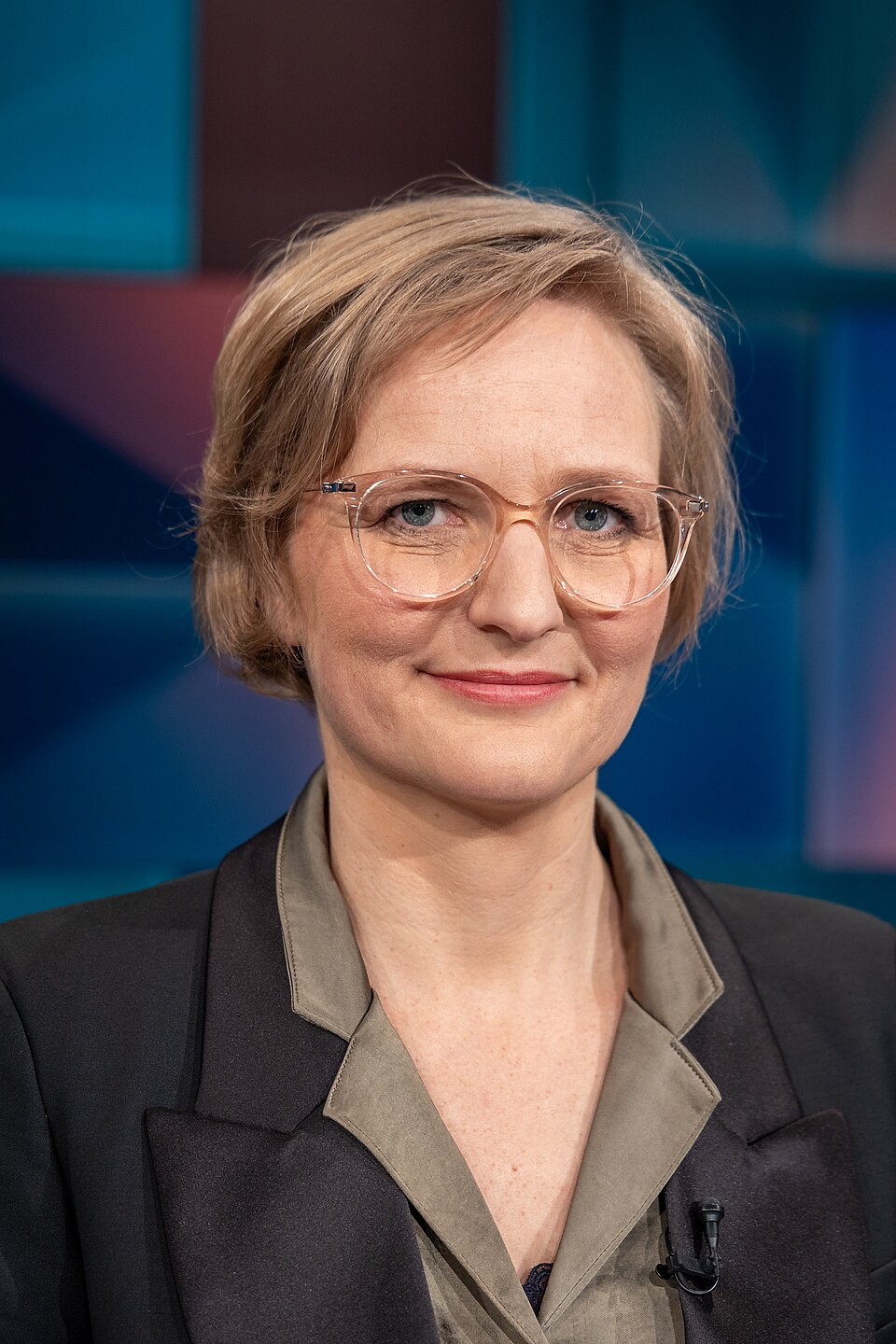
Franziska Brantner: Championing the Work-Life Balance Debate for Mothers
In the demanding world of politics, where public scrutiny is relentless and schedules are unforgiving, finding equilibrium between a high-profile career and family life is a universal challenge. Yet, as Green party co-leader Franziska Brantner powerfully points out, this question disproportionately lands on the shoulders of women. As she navigates her significant political role while raising her daughter, the Kind she shares with Boris Palmer, Brantner has become a prominent voice questioning why mothers are almost exclusively asked how they manage the delicate art of balancing child and career.
Franziska Brantner, 45, ascended to the co-leadership of the German Greens in November, a role that places her squarely in the national spotlight. Despite the intense public interest surrounding her, Brantner has largely shielded her private life from the media glare. However, she has made an exception to discuss the realities of single motherhood and the broader societal expectations placed upon women in power, offering rare insights that resonate far beyond political circles.
The Art of Balance: Why Mothers Bear the Brunt of the Question
Brantner's candid reflections on combining motherhood with a demanding political career strike a chord with countless women globally. Speaking to BUNTE magazine, she described the endeavor as "an art." What truly sets her commentary apart, however, is her pointed critique of the gendered nature of this inquiry: "I always found it strange that only women are asked how they manage it. The fathers almost never."
This observation highlights a deep-seated societal expectation. Women, irrespective of their professional achievements, are frequently interrogated about their ability to juggle family responsibilities alongside their careers. This persistent line of questioning subtly implies that career success for women is often viewed through the lens of potential familial sacrifice, a burden rarely imposed on men. Brantner's statement is not merely a personal grievance; it's a powerful call to examine and challenge these ingrained biases, advocating for a more equitable distribution of domestic and parental inquiries.
Her experience as a single mother further amplifies the complexity of this balance. While she clearly states, "I am happy to be a mom. I also take time for that," the reality of managing a demanding political career, including travel, public appearances, and policy debates, alongside the sole responsibility of raising a child, is immense. It requires meticulous organization, unwavering commitment, and likely, a strong support network, even if specifics of that network remain private. Her stance reminds us that achieving this "art" often means making deliberate choices and setting clear priorities.
Franziska Brantner, Boris Palmer, and the Private Sphere of a Public Life
While Franziska Brantner maintains a tight lid on her current relationship status and most aspects of her family life, certain details have entered the public domain, primarily concerning her past relationship with Boris Palmer. Palmer, 52, the distinctive mayor of Tübingen, was in a relationship with Brantner until 2013. Their paths likely crossed through their shared work in politics, and together, they have a daughter, born in 2010. This shared history, though largely kept out of the public eye during their relationship, now forms part of the narrative around Brantner's life as a mother in the public sphere.
The fact that Brantner is raising her daughter alone, a Kind she shares with Boris Palmer, adds another layer to her perspective on work-life balance. Single parents often face amplified challenges, from financial strains to the sole responsibility of childcare and emotional support. Brantner's ability to not only manage this but also thrive in a high-pressure political environment serves as a powerful testament to her resilience and organizational skills. Yet, she wisely chooses to protect her daughter's privacy, a common decision among public figures to ensure their children have as normal an upbringing as possible away from media intrusion.
For more detailed insights into her personal journey, you can read about Franziska Brantner: Green Leader on Career & Raising Daughter Solo and Franziska Brantner Reveals Private Life: Her Daughter with Boris Palmer.
Beyond Stereotypes: Strong Women and the Question of Influence
Franziska Brantner's rise to co-leadership wasn't without its own set of challenges and public narratives. Rumors circulated, suggesting that Wirtschaftsminister Robert Habeck might have orchestrated her appointment, implying that Ricarda Lang (30), the previous co-leader, had to step aside. Brantner vehemently rejected these speculations, stating to BUNTE, "It is an uncouth habit to always suspect a powerful man as the string-puller when strong women make decisions."
This statement is crucial. It underscores a pervasive issue in how society, and particularly the media, often frames the achievements of women in leadership roles. There's a persistent tendency to attribute their success, in part or whole, to the influence or patronage of a male counterpart. Brantner's rejection of this narrative is a powerful assertion of her own agency, competence, and hard work. It's a call for observers to recognize and respect the independent capabilities of women leaders, rather than reducing their accomplishments to the shadow of a male figure.
Her experience, much like that of many women navigating public life, highlights the double standards that still exist. While male leaders are celebrated for their strategic acumen, women often face additional scrutiny regarding their 'support system,' their emotional resilience, or their perceived dependence on others. Brantner, alongside her good relationship with Ricarda Lang, demonstrates that female leadership can be about collaboration and individual merit, not just competition or male endorsement.
Practical Pathways: Navigating Work-Life Balance in Modern Society
Brantner's insights provide a springboard for a broader discussion on how society can better support parents, especially mothers, in achieving a sustainable work-life balance. Her experiences as a Green party leader and a mother offer valuable lessons and highlight areas for systemic improvement.
- Challenging Gendered Questions: The first step is to actively question and dismantle the assumption that childcare is primarily a mother's domain. Media, employers, and even casual conversations should equally inquire about fathers' roles and strategies for balancing work and family.
- Advocacy for Systemic Support: True balance requires more than individual effort; it demands robust societal infrastructure. This includes accessible, affordable, and high-quality childcare; flexible work arrangements; generous parental leave policies that encourage fathers to participate equally; and a cultural shift in workplaces that values output over presenteeism.
- Prioritization and Boundaries: For individuals, learning to prioritize tasks, delegate responsibilities, and set clear boundaries between work and family life is crucial. Brantner's commitment to taking time for her daughter, even with a demanding schedule, exemplifies this. It means consciously saying "no" to certain demands to protect family time.
- Building a Support System: No one can do it all alone. Whether it's family, friends, co-parents, or professional childcare, a strong support network is invaluable. While Brantner keeps her specific network private, the necessity for such a system in high-demand roles is undeniable.
- Leading by Example: Women like Franziska Brantner who speak out and openly navigate these challenges serve as powerful role models. Their willingness to be vulnerable about the difficulties, while also showcasing their professional competence, helps normalize the conversation and inspire others.
Ultimately, Franziska Brantner's reflections on being a mother while leading a major political party are more than just personal anecdotes. They are a profound commentary on the persistent gender inequalities embedded in our societal and professional structures. Her voice, echoing the experiences of countless women, is a vital contribution to the ongoing conversation about work-life balance, challenging us all to envision and build a more equitable future where the "art" of balancing child and career is equally appreciated and supported for all parents.