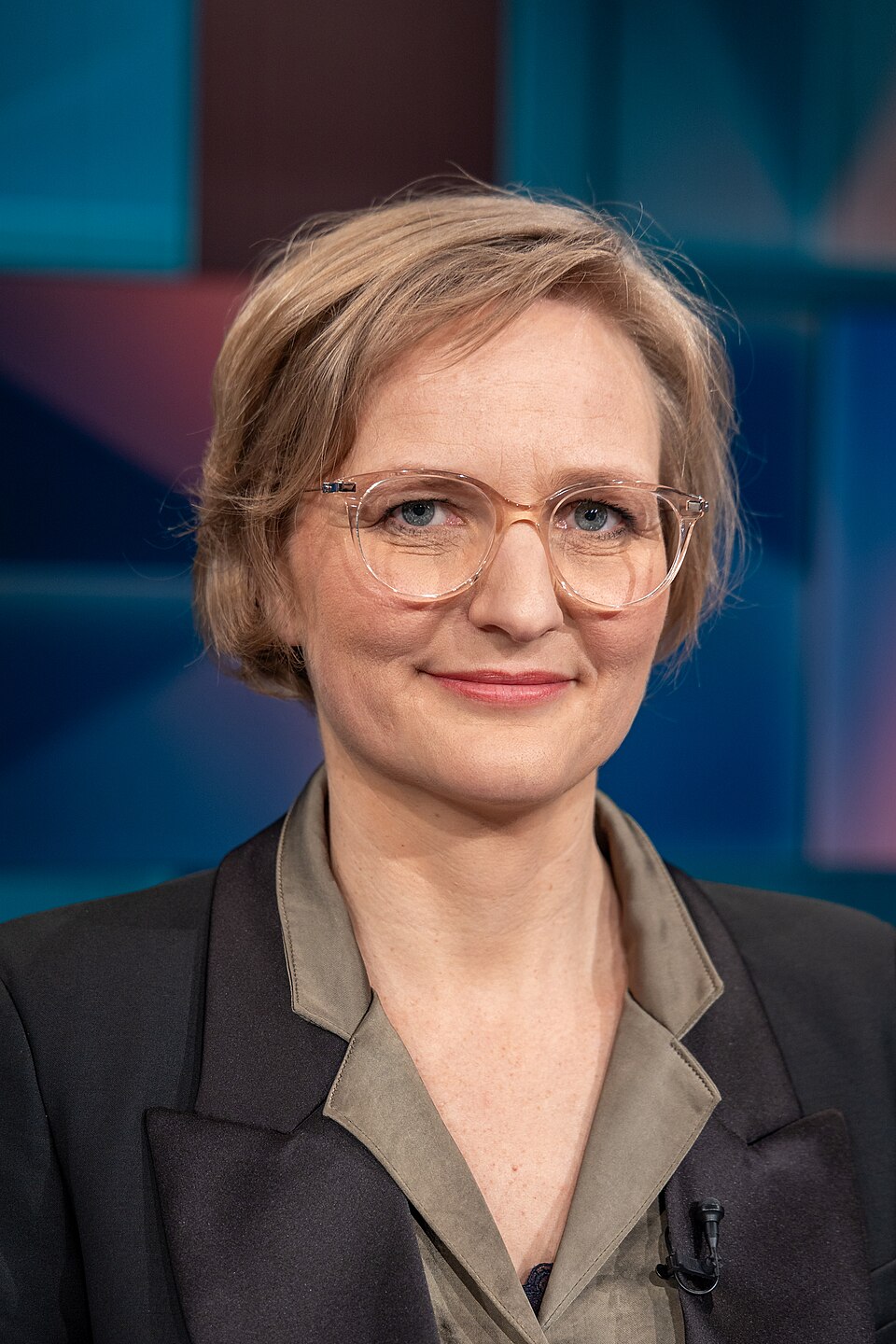
A Glimpse Behind the Political Curtain: Franziska Brantner's Private World
In the high-stakes arena of German politics, Franziska Brantner stands as a formidable figure. As the co-leader of the influential Green Party since November, her professional life is a matter of public record and intense scrutiny. Yet, beneath the political headlines and policy debates, Brantner has meticulously guarded her private world, offering only rare glimpses into the life she leads away from the Bundestag.
Recently, however, Brantner chose to open up, shedding light on a significant part of her personal journey: her role as a mother to a daughter she shares with Tübingens Oberbürgermeister, Boris Palmer. The dynamic involving Franziska Brantner, Boris Palmer, and their Kind (child) has long been a topic of quiet interest, and Brantner's candid remarks provide valuable insight into the challenges and joys of balancing a demanding public career with the deeply personal commitment of parenthood.
Brantner, 45, has been a prominent face in German politics for many years, but details of her family life have remained largely unknown. This deliberate choice to shield her loved ones from the incessant media glare is a testament to her dedication to privacy. What is known is that she was in a relationship with Boris Palmer, 52, until 2013. Their connection, reportedly forged through their shared political work, was kept predominantly out of the public eye, with the couple deliberately avoiding joint appearances. Their daughter, born in 2010, is the cherished outcome of this past relationship, and Brantner confirms she is raising her as a single mother.
The Unique Challenge of Single Parenthood in the Public Eye
For any parent, combining the demands of career and family is an intricate balancing act. For a single mother holding a leadership position in national politics, this challenge is amplified exponentially. Franziska Brantner articulates this reality with poignant simplicity: "Kind und Karriere miteinander zu vereinbaren ist eine eine Kunst," meaning "Combining child and career is an art."
Her experience resonates with countless women globally who strive to excel professionally while nurturing their families single-handedly. Brantner's commitment to her daughter, now a teenager, is unwavering. Despite her rigorous schedule, she emphasizes: "Ich bin gerne Mama. Dafür nehme ich mir auch Zeit," – "I like being a mom. I also take time for it." This statement underscores a profound dedication to fostering an "innig" (intimate or close) mother-daughter relationship, ensuring that quality time is prioritized amidst the relentless pace of political life. The journey of Franziska Brantner as a single mother, particularly one in such a prominent political role, highlights the immense dedication required. Her daughter, the result of her relationship with Boris Palmer, is a central figure in her personal world, demonstrating that even public figures can find profound fulfillment in private family moments.
This commitment to her child also involves a masterclass in setting boundaries. In an age where public figures are often expected to share every facet of their lives, Brantner's disciplined approach to privacy is both refreshing and exemplary. It's a conscious decision to protect her daughter from the often intrusive scrutiny that comes with being the child of two well-known politicians. This choice allows her daughter to experience a more normal childhood, shielded from the pressures of fame.
Challenging the Narrative: Why Are Only Mothers Asked About Work-Life Balance?
Beyond simply describing the difficulties of balancing work and family, Brantner raises a crucial point that challenges deeply ingrained societal norms. She openly questions the gendered nature of queries about work-life balance, noting: "Ich fand es immer komisch, dass nur Frauen gefragt werden, wie sie das hinkriegen. Die Väter so gut wie nie," – "I always found it strange that only women are asked how they manage this. Fathers almost never."
This observation strikes at the heart of an often-unspoken bias. Society frequently places the primary responsibility for childcare and household management on women, even as they increasingly pursue ambitious careers. When a woman achieves a high-profile position, the question of "how she juggles it all" is almost inevitable. Yet, her male counterparts, even those with families, rarely face the same line of inquiry. This disparity suggests an underlying assumption that childcare is inherently a mother's domain, or that fathers' career paths are simply unaffected by their parental responsibilities. For a deeper dive into this societal expectation, read more in our related article: Franziska Brantner: Why Mothers Face the Work-Life Balance Question.
Brantner's statement serves as a powerful call for a more equitable discourse. It pushes for a recognition that parenting is a shared responsibility, and that fathers, too, navigate the complexities of combining career with family life. By highlighting this imbalance, she advocates for a shift in perspective that could ultimately lead to more supportive workplaces and societal structures for all parents, regardless of gender.
Navigating Public Scrutiny: A Masterclass in Privacy
In the hyper-connected world of modern politics, maintaining a semblance of privacy is an increasingly difficult feat. For someone as prominent as Franziska Brantner, whose every political move is analyzed, her ability to keep her private life largely out of the public domain is a masterclass in strategic discretion. Her decision to speak about her daughter with Boris Palmer in a rare interview was an exception, rather than the rule, providing just enough information to acknowledge her reality without exposing intimate details.
Brantner consciously refrains from disclosing her current relationship status, further solidifying her commitment to separating her public persona from her private existence. This deliberate vagueness is not about secrecy for its own sake, but about creating a protective shield around her family, particularly her daughter. The relentless glare of the media can be unforgiving, and children of public figures often bear the brunt of this exposure. By drawing clear lines, Franziska Brantner has masterfully protected her "Kind" (child) from the intense media scrutiny that often surrounds politicians like herself and Boris Palmer.
This approach offers several benefits. It allows Brantner to focus on her political work without constant speculation about her personal life. More importantly, it safeguards her daughter's right to a normal, unencumbered childhood, free from the weight of public expectations or intrusive paparazzi. It’s a testament to her strength and determination that she has managed to carve out such a sanctuary in an otherwise transparent world.
Balancing Act: Practical Insights for Modern Parents
Franziska Brantner's journey offers valuable lessons for all parents striving to balance professional aspirations with family life. While not everyone is a national politician, the core challenges of time management, emotional energy, and societal expectations are universal. Here are some practical insights inspired by her approach:
- Prioritize Quality Time: Brantner's statement, "I also take time for it" (referring to being a mom), highlights the importance of intentional parenting. Even if quantity of time is limited, making sure the time spent with your child is focused, engaging, and meaningful can make a huge difference. Put away devices, listen actively, and create shared experiences.
- Set Clear Boundaries: Learning to say 'no' to non-essential commitments and creating defined 'family zones' free from work intrusions is crucial. For public figures, this might mean a strict no-media policy at home; for others, it could be a 'no email after 7 PM' rule.
- Challenge Gendered Expectations: Echoing Brantner's critique, actively question and challenge the assumption that mothers are solely responsible for domestic life. Encourage partners to share responsibilities equally and advocate for workplaces that support flexible arrangements for all parents. Engage in conversations that normalize fathers' involvement in childcare and career navigation.
- Build a Support System: Whether it's co-parenting effectively with an ex-partner (like Brantner and Palmer, presumably), relying on extended family, a trusted network of friends, or professional childcare, having a robust support system is invaluable, especially for single parents.
- Practice Self-Compassion: The art of balancing career and family is imperfect. There will be days when you feel you're falling short on both fronts. Embrace self-compassion, acknowledge your efforts, and remember that striving for balance is an ongoing process, not a destination.
For more on her strategies and dedication as a solo parent in a high-profile role, delve into: Franziska Brantner: Green Leader on Career & Raising Daughter Solo.
Franziska Brantner's decision to share a glimpse into her personal life offers a powerful message: while her political career is public and demanding, her dedication to her daughter remains paramount. Her story is a testament to the resilience of single mothers, the ongoing struggle for gender equity in work-life discussions, and the unwavering commitment to protecting one's private sphere in an increasingly transparent world. As society continues to evolve, her voice contributes significantly to a much-needed dialogue about modern parenthood and the expectations placed on both women and men.